
Solar Structures in India: Types, Materials, Manufacturing & Applications
A complete guide to solar mounting structures, Module Mounting Structures (MMS), rooftop solar structures, ground mount solar structures, C&I solar structures, GI coils, solar purlins and solar structure manufacturing in India.
What Are Solar Structures?
Solar structures, also known as solar mounting structures or Module Mounting Structures (MMS), are the structural systems used to support photovoltaic solar modules.
While solar panels are responsible for generating electricity, the mounting structure provides the mechanical foundation that keeps the modules securely positioned. A properly engineered solar structure transfers loads from the modules into the roof, foundation or ground support system.
As solar installations continue to expand across India, reliable solar mounting structures are becoming increasingly important for residential rooftops, commercial and industrial facilities, captive solar projects and utility-scale solar plants.
According to the Ministry of New and Renewable Energy (MNRE), India has continued to expand its installed renewable and solar power capacity, creating a growing requirement for reliable solar project infrastructure.
In This Guide
Types of Solar Structures in India
Solar mounting structures can be designed for several different applications. The appropriate structure depends on the installation location, module configuration, structural loads, roof or soil conditions and project requirements.
1. Rooftop Solar Structures
Rooftop solar structures are designed to install solar modules on existing buildings. They are widely used on homes, offices, warehouses, factories, schools, commercial buildings and industrial facilities.
Rooftop MMS can be designed for RCC roofs, metal sheet roofs and other building configurations. The design needs to consider roof geometry, module orientation, inclination, wind loads and the method used to attach the structure to the building.
2. Ground Mount Solar Structures
Ground mount solar structures are used when photovoltaic modules are installed on open land rather than an existing building.
They are commonly used for utility-scale solar projects, open-access solar plants, captive solar installations and large commercial projects.
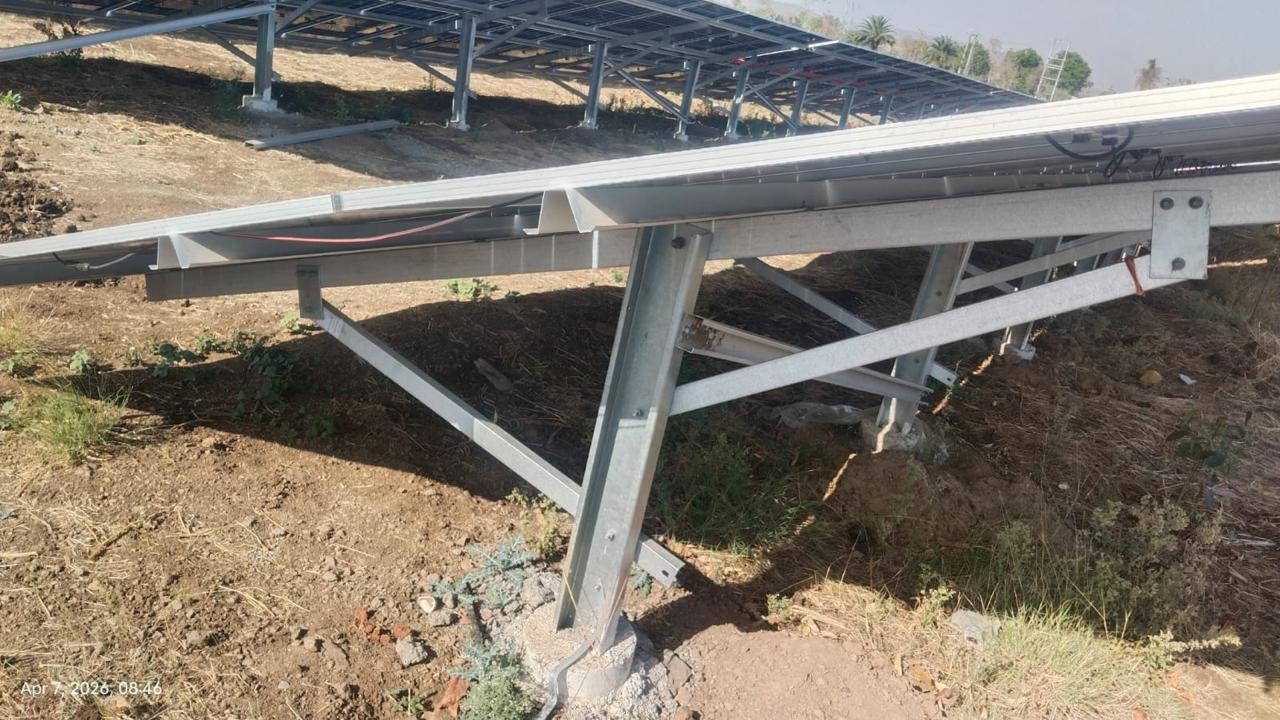
A typical ground-mounted structure can include columns, rafters, purlins, bracing members, module rails and fasteners. The structural system must be designed around the project's wind conditions, foundation arrangement, soil characteristics, module configuration and required inclination.
3. C&I Solar Structures
C&I stands for Commercial and Industrial solar. C&I solar structures are used for factories, warehouses, commercial buildings and other large energy-consuming facilities.
Industrial rooftops often have equipment, skylights, ventilation systems and other constraints. As a result, C&I solar structures frequently require project-specific engineering rather than a one-size-fits-all mounting system.
4. Elevated Solar Structures
Elevated solar structures position photovoltaic modules above the normal mounting height. They can be useful when the space below the solar array needs to remain accessible.
Applications can include industrial facilities, commercial properties, parking areas and other locations where maintaining usable space below the solar array is important.
What Is MMS in Solar?
MMS stands for Module Mounting Structure.
The terms solar MMS, solar mounting structure and solar structure are commonly used in the solar industry to describe the mechanical framework that supports photovoltaic modules.
Depending on the application, an MMS can contain:
- Columns and posts
- Rafters
- C and Z purlins
- Hat profiles
- Module rails
- Brackets
- Base plates
- Bracing members
- Clamps and fasteners
- Cable management components
Materials Used for Solar Structures
Solar structures operate outdoors and are exposed to environmental conditions for many years. Material selection is therefore an important part of solar structure design and manufacturing.
Galvanized Steel / GI
Galvanized steel, commonly referred to as GI, uses a zinc coating to improve corrosion resistance. GI steel can be used for solar purlins, channels, brackets, rails and other structural components.
Galvalume / GL / BGL
Galvalume-coated steel, also referred to in the industry as GL or BGL, uses an aluminium-zinc coating system. It can be suitable for applications where corrosion resistance and long-term outdoor exposure are important considerations.
Hot Dip Galvanized Steel
Hot dip galvanizing provides a zinc coating intended to protect steel from corrosion. It is commonly considered for structural applications where long-term corrosion protection is important.
The appropriate material and coating should always be selected based on the project's structural requirements, environmental conditions, design life and applicable specifications.
GI Coils for Solar Structures
GI coils are an important raw material for manufacturing many solar structure components. The flat steel coil can be processed through slitting, roll forming, punching, cutting and other manufacturing operations to produce the required structural profile.
When sourcing GI coils for solar structure manufacturing, manufacturers and EPC companies should consider:
- Steel grade
- Coil thickness
- Coil width
- Zinc coating
- Mechanical properties
- Surface quality
- Dimensional tolerances
- Material documentation and traceability
The correct coil specification depends on the final profile and structural requirements. A solar structure manufacturer should therefore evaluate the complete manufacturing requirement rather than selecting material based only on price per kilogram.
Solar Purlins and Roll-Formed Profiles
Solar purlins are structural members used to support solar modules and transfer loads through the mounting structure. They are commonly manufactured using cold roll forming.
C Purlins
C purlins have a C-shaped cross-section and can be used in various solar and structural applications depending on the engineering design.
Z Purlins
Z purlins have a Z-shaped profile and are commonly used in structural systems where their geometry provides the required strength and connection arrangement.
Hat Purlins
Hat-shaped profiles can also be manufactured for solar and other structural applications. Their exact dimensions and thickness depend on the project's engineering requirements.
Cold Roll Forming
Cold roll forming is a continuous manufacturing process in which a flat steel strip passes through a series of forming stations. Each station gradually shapes the material into the required profile.
The process is particularly suitable for solar structures because many solar components are long, repetitive profiles that need consistent dimensions across large production quantities.
Why Solar Structure Thickness Matters
Steel thickness affects the weight, stiffness, strength, material cost and manufacturing characteristics of a solar structure.
However, choosing a thicker section does not automatically mean that the structure is better. The objective is to select the appropriate combination of profile geometry, material grade and thickness for the actual structural requirements.
This is particularly important for large solar projects because unnecessary structural weight can increase material consumption, transportation requirements and installation effort.
Solar Structure Manufacturing Process
Manufacturing a solar structure typically involves several stages depending on the product.
Material
GI, GL, BGL or other specified steel material is procured according to requirements.
Slitting
Coil width can be processed according to the required profile and production process.
Roll Forming
Steel strip is continuously formed into the required solar profile.
Punching & Cutting
Holes, slots and finished lengths are produced according to the drawing.
Quality & Dispatch
Finished components are inspected, packed and prepared for project delivery.
How to Choose a Solar Structure Manufacturer
Selecting a solar structure manufacturer should involve more than comparing the lowest price per kilogram.
1. Engineering Capability
The manufacturer should understand the structural requirements and be able to manufacture according to engineering drawings and project specifications.
2. Manufacturing Capacity
Large solar projects can require significant quantities of repetitive steel components. Production capacity and consistency are therefore important.
3. Material Quality
Verify the steel grade, thickness, coating and relevant material documentation.
4. Dimensional Accuracy
Profile dimensions, cut lengths, hole positions and slots should remain consistent throughout production.
5. Quality Control
A good supplier should have an inspection process covering incoming material and finished products.
6. Production and Delivery
Solar structures are long and bulky components. Production planning, packaging and logistics can have a significant effect on the total delivered project cost.
Solar Structure Manufacturing in Madhya Pradesh
Madhya Pradesh has a growing industrial and renewable-energy ecosystem, creating opportunities for solar EPC companies, developers, industrial customers and component manufacturers.
Industrial regions and cities including Indore, Pithampur, Bhopal, Dewas, Ujjain, Gwalior, Jabalpur, Sagar and Ratlam are relevant markets for industrial solar projects and renewable-energy supply chains.
For EPC companies working in central India, sourcing solar structures from a manufacturer in Madhya Pradesh can provide a practical option for reducing logistical complexity and improving communication during production.
Solar Structure Manufacturer in Indore
Grovect Engineering Solutions is an engineering and manufacturing company based in Indore, Madhya Pradesh.
Grovect manufactures solar mounting structures and engineered steel components, with capabilities covering cold roll forming, solar profiles, fabrication and custom manufacturing.
This makes Grovect a manufacturing option for customers looking for solar structures in Indore, Pithampur and other parts of Madhya Pradesh.
Why Choose Grovect for Solar Structures?
Grovect combines engineering and manufacturing to produce solar mounting structures and engineered steel components for project-specific requirements.
Engineering-Led Manufacturing
Manufacturing decisions are made with attention to profile geometry, material and production requirements.
Cold Roll Forming
Roll-formed steel profiles can be produced for repetitive solar and industrial applications.
Custom Profiles
Components can be manufactured according to customer drawings and project specifications.
Manufacturing in India
Grovect operates from Indore, Madhya Pradesh, serving solar and industrial manufacturing requirements.
Explore Grovect Solar & Manufacturing
Solar Mounting Structures
Explore Grovect's solar structure and solar mounting product range.
Manufacturing Capabilities
Explore cold roll forming, fabrication, machining and other manufacturing capabilities.
Industries We Serve
Discover how Grovect supports solar, industrial, agriculture and other manufacturing applications.
Request a Quote
Have a solar structure requirement? Send Grovect your drawing, BOQ or project details.
Frequently Asked Questions About Solar Structures
What is a solar mounting structure?
A solar mounting structure is the mechanical framework used to support and secure solar photovoltaic modules. It transfers structural loads from the modules to the roof, foundation or ground support system.
What is MMS in solar?
MMS stands for Module Mounting Structure. It is the structural framework used to install and support solar PV modules in rooftop, ground-mounted and commercial and industrial solar projects.
What materials are used for solar structures?
Solar structures commonly use galvanized steel, Galvalume and other coated steel products. Material selection depends on the structural design, corrosion environment and project requirements.
What is the difference between rooftop and ground mount solar structures?
Rooftop structures are installed on existing buildings, while ground mount structures are supported by foundations or ground-mounted columns. Their designs differ according to roof or soil conditions, wind loads, module configuration and installation requirements.
Who manufactures solar structures in Madhya Pradesh?
Grovect Engineering Solutions manufactures solar mounting structures and engineered steel components from Indore, Madhya Pradesh, including rooftop, ground mount, C&I and custom solar structure components.
Looking for Solar Structures?
Share your solar structure drawings, BOQ, profile dimensions or project requirements with Grovect. Our engineering and manufacturing team can help you evaluate the right production approach.